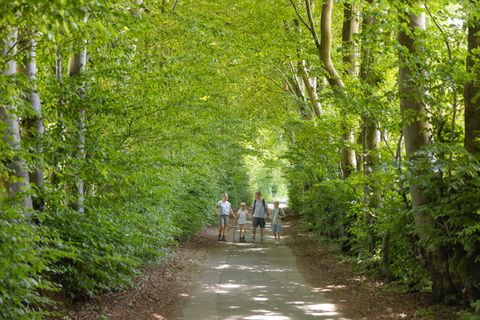
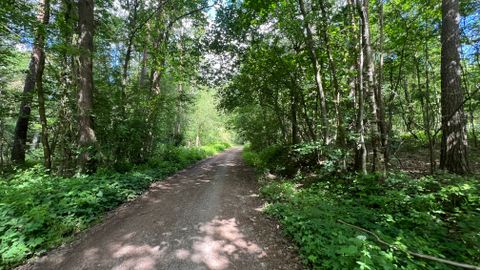
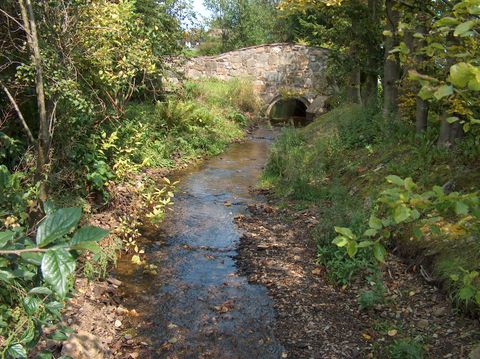
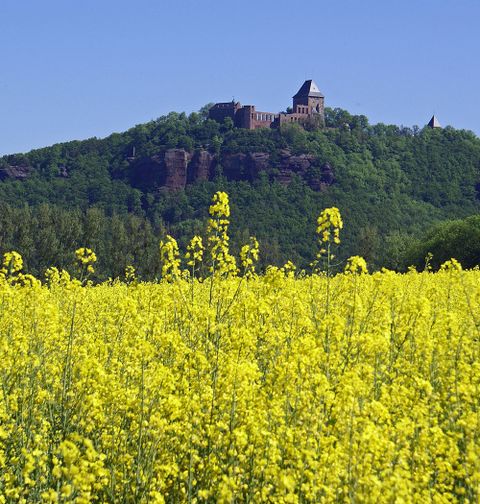
Pejo (Peter-Josef) Weiß (*1926 2012) would be delighted with the hiking trail that bears his name. Fascinating nature experiences, places steeped in history and romantic paths make it a constant adventure.
Distance:10.5 km
Duration:3:16 h
Difficulty:Medium
The road takes its name from the post-war period, when coffee smuggling from Belgium was one of the most important sources of income for the people of Schmidt. Schmidt was over 90% destroyed at the end of the Second World War, including the parish church of St. Hubertus. With the profits from smuggling coffee across the nearby border, the people of Schmidt got their families through and rebuilt their destroyed houses. Of course, this did not go unnoticed by the parish priest at the time, Josef Beyer. The reconstruction of the church initially progressed somewhat less quickly. He said in a sermon: "I know that you are getting a headache from all the money. For me it's the other way around, because I don't know where I'm going to get the money to rebuild the church." From now on, the smugglers sacrificed part of their profits from the coffee business to rebuild the church.
church. This is why it is popularly known as St. Mokka.
On a day in autumn, when wisps of mist drift through the spruce forests like ghosts, you can sense here on the Ochsenkopf a little of what made the forest battles so eerie for the soldiers on both sides and contributed to the myths and legends of the Hürtgen Forest.
This trail takes you to US positions from the time of the fighting in the Hürtgenwald in 1944-45, which have been investigated and mapped by the LVR Office for the Preservation of Monuments.