
Copyright: Rureifel Tourismus GmbH, Michelle Wiesen Copyright: Rureifel Tourismus GmbH, Michelle Wiesen Copyright: Rureifel Tourismus GmbH, Michelle Wiesen
Historical and Literary Walking Trail
To this day, the Hürtgen Forest serves as a reminder of the fierce battles of World War II that left a deep mark on the Eifel region. The Historical and Literary Hiking Trail, with its seven themed loops, combines stunning natural scenery with historical insights.
The Seven Thematic Loops
7 results
Hiking
Archäologischer Wanderweg Hürtgenwald 1944-45 [94]
HürtgenwaldDistance:4.1 km
Duration:1:15 h
Difficulty:Easy
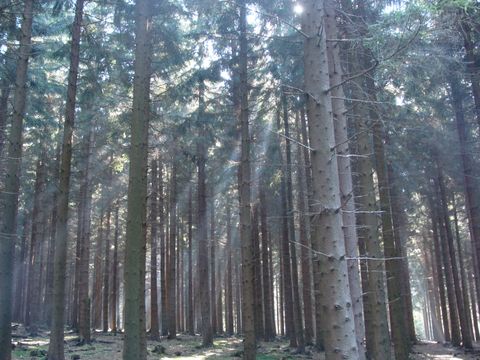
This trail takes you to US positions from the time of the fighting in the Hürtgenwald in 1944-45, which have been investigated and mapped by the LVR Office for the Preservation of Monuments.
Hiking
Westwall-Weg [86]
HürtgenwaldDistance:8.0 km
Duration:2:45 h
Difficulty:Medium
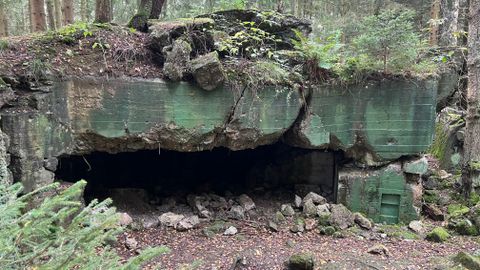
Since the beginning of our era, Western Europe has been cut through by fortified border fortifications, such as the Roman Limes, the medieval castle line or the forts of the 19th century.
Hiking
Ochsenkopf-Weg [96]
HürtgenwaldDistance:9.3 km
Duration:2:30 h
Difficulty:Easy
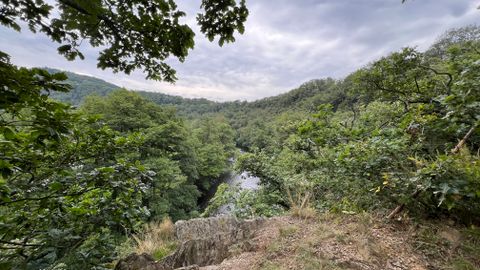
On a day in autumn, when wisps of mist drift through the spruce forests like ghosts, you can sense here on the Ochsenkopf a little of what made the forest battles so eerie for the soldiers on both sides and contributed to the myths and legends of the Hürtgen Forest.
Hiking
Heinrich-Boell-Weg [35]
HürtgenwaldDistance:6.2 km
Duration:2:00 h
Difficulty:Easy
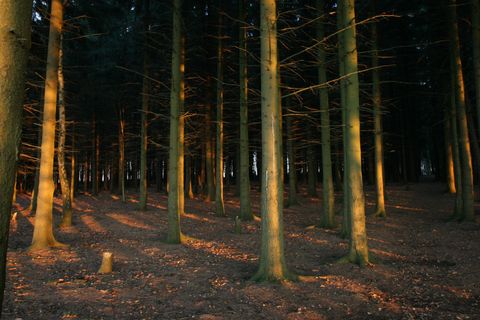
On the evening of September 11, 1944, just fourteen weeks after the Normandy landings, the 1st US Army stood on the German border and on the Siegfried Line, a line that was not actually to be reached until May 1945.
Hiking
Hemingway-Trail [44]
HürtgenwaldDistance:16.1 km
Duration:4:00 h
Difficulty:Medium
A few days after the disaster of the "Battle of All Souls", Eisenhower's planned advance to the Rhine began on November 16, 1944 with "Operation Queen", the largest tactical air attack in support of ground troops during the entire Second World War.
Hiking
Paul-Boesch-Weg [76]
HürtgenwaldDistance:6.5 km
Duration:2:00 h
Difficulty:Medium
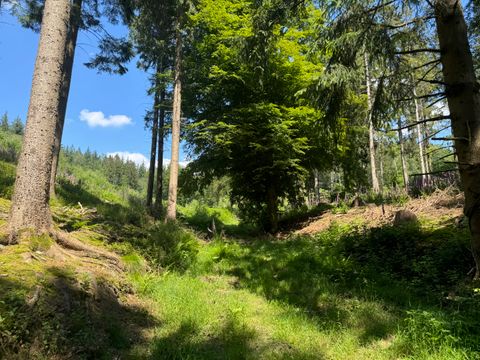
After months of fighting, the area around the "Wilde Sau" forest district had become the "Killing Field" of the Western Front. Regiments of three American divisions, the 9th, 28th and 4th, had fought here and suffered heavy losses.
Hiking
Kall Trail [66]
HürtgenwaldDistance:8.8 km
Duration:2:30 h
Difficulty:Medium
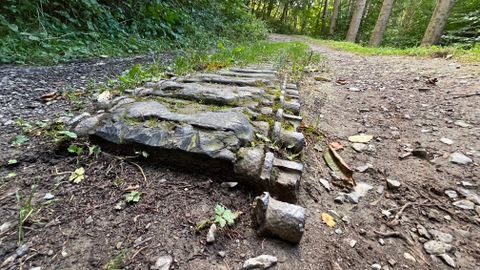
Hike from Vossenack through the Kalltal valley to Schmidt-Kommerscheidt. Follow the number 66.